
Mark 12:13–17 (ESV)
13 And they sent to him some of the Pharisees and some of the Herodians, to trap him in his talk. 14 And they came and said to him, “Teacher, we know that you are true and do not care about anyone’s opinion. For you are not swayed by appearances, but truly teach the way of God. Is it lawful to pay taxes to Caesar, or not? Should we pay them, or should we not?” 15 But, knowing their hypocrisy, he said to them, “Why put me to the test? Bring me a denarius and let me look at it.” 16 And they brought one. And he said to them, “Whose likeness and inscription is this?” They said to him, “Caesar’s.” 17 Jesus said to them, “Render to Caesar the things that are Caesar’s, and to God the things that are God’s.” And they marveled at him.
Today’s passage is just incredible and one of my favorites. But if we’re going to understand it fully, we need to have some knowledge of the cultural context of this passage.
First, we need to understand taxes in that cultural context. For the average Jewish person, taxes were serious business. They had to pay local taxes, Temple taxes, and those who lived in Galilee had to pay a tax to king Herod as well. In addition to all those taxes, there were taxes that had to be paid to Rome.
Roman taxes were a bitter pill for the Jewish people to swallow. They were God’s chosen, free people, but going back about 500 years or so, the Jewish people haven’t been free. They’ve been ruled by others to one degree or another, beginning with the Babylonians and now presently by the Romans. The Romans loved to tax those they ruled, and the Jewish people hated Rome for its rule and for the tax that reminded them of the Roman occupation.
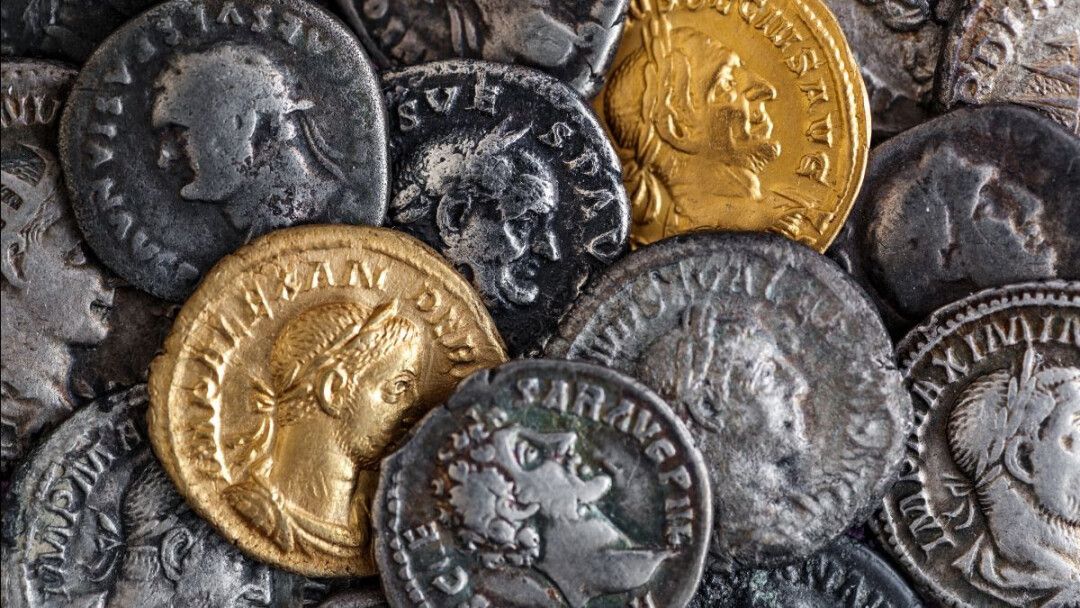
We also need to understand something of the coin as it relates to Jewish beliefs. N.T. Wright has pointed out that if the Romans were going out of their way to be offensive to Jews, they couldn’t have done a better job because of what was on the coin.
Jews were forbidden to make or carry carved images, especially of another human being. On the coin was the image of the Roman Emperor Tiberius, and there was some writing on the coin as well that said of Tiberius, “Son of god, high priest.”
So you can imagine how offensive the coin is to the Jewish people. The coin reminds them of the Roman occupation, and it is a carved image promoting Tiberius as god, not to mention the taxes, did I mention the taxes?
Now take all that into consideration and read the passage again. We begin to understand what’s happening. The Pharisees and the Herodians are working together and trying to trap Jesus with their question, “Should we pay the taxes or should we not?”
If Jesus says “yes, pay them,” then the religious leaders will denounce Jesus to the crowd as supporting Rome.
If Jesus says, “No, don’t pay them,” then the religious leaders will tell the Roman Governor Pontius Pilate that Jesus is seditious, supporting treason against Rome, which was a capital offense.
The request of Jesus for the religious leaders to produce a coin is an embarrassing moment for them because they will have to have the coin, they will have to look at it and touch it, which is something that they are loath to do, but it goes to show how desperate they are to stop Jesus.
Then, after Jesus has them confirm whose image is on the coin, Jesus says the most stunning and unexpected, “Give to Caesar what belongs to Caesar and to God what belongs to God.”
The religious leaders never saw that reply coming. We could get a little lost in the weeds here if we were trying to unpack this fully, so let’s focus on one particular thing. In Genesis 1.26-27 we know that we, humanity, are created in the image of God. We belong to the Lord, and we bear God’s image. So, if we bear God’s image, then all of us owe our lives to the Lord and should respond by giving our lives back to Him. It’s really the only gift that we can give the Lord.
You—YOU bear the image of God. It’s stamped on you and on every human being. Only human beings have that image of our Creator stamped upon them. We belong to Him! And Jesus calls us to give to God what belongs to Him.
That’s amazing stuff. It’s difficult to grasp the width and depth of all this, but when you think of the cross and Jesus’ arms spread wide, you get some idea of how deeply you matter to the Lord and to what length He went to open the way for us to come back to Him because we belong to Him.
As we grasp the meaning and reality that we’re stamped with the image of God, there is a great question for us to consider: Is there any part of your life that you haven’t entrusted to the Lord? Is there anything that you’re grasping tightly and haven’t entrusted to Jesus? If so, take the time to talk with Jesus about that today and give it to Him! I guarantee that you will receive the best in return, more than you could ask for or imagine. He may even take that part of your life that you were withholding and give it back to you better than it was before. Trust Him!
God bless you, and know that you are constantly in my prayers!
Scott