
When I was in college, some friends of mine invited me to go rappelling with them. I had never been before, and it sounded like a great adventure. We hiked up a trail that led us to the top of a cliff with the valley below. My friends were experienced climbers and quickly had me suited up with a helmet, gloves, and a harness. They then attached a rope to the harness and, to my surprise, attached the rope to a very small anchor called a Camalot, which they then inserted into a crack in a rock. My friends then gave me instructions regarding rappelling. However, I could not take my eyes off the small Camalot that was supposed to prevent me from falling (did I mention that it’s very small?). One of my friends, sensing my unease, said, don’t worry, trust me, it will hold you.
Trusting God is at the heart of chapters 7-12. This is a great passage, and it is an interesting situation that is unfolding.
Basically, Ahaz, the king of Judah, is worried because the king of the northern kingdom of Israel and the king of Syria have banded together to attack Judah. So what does Ahaz do? Ahaz turns to Assyria for help, trusting the Assyrians to deliver Judah, which was something that the people of God were not to do; they were to trust the Lord alone.
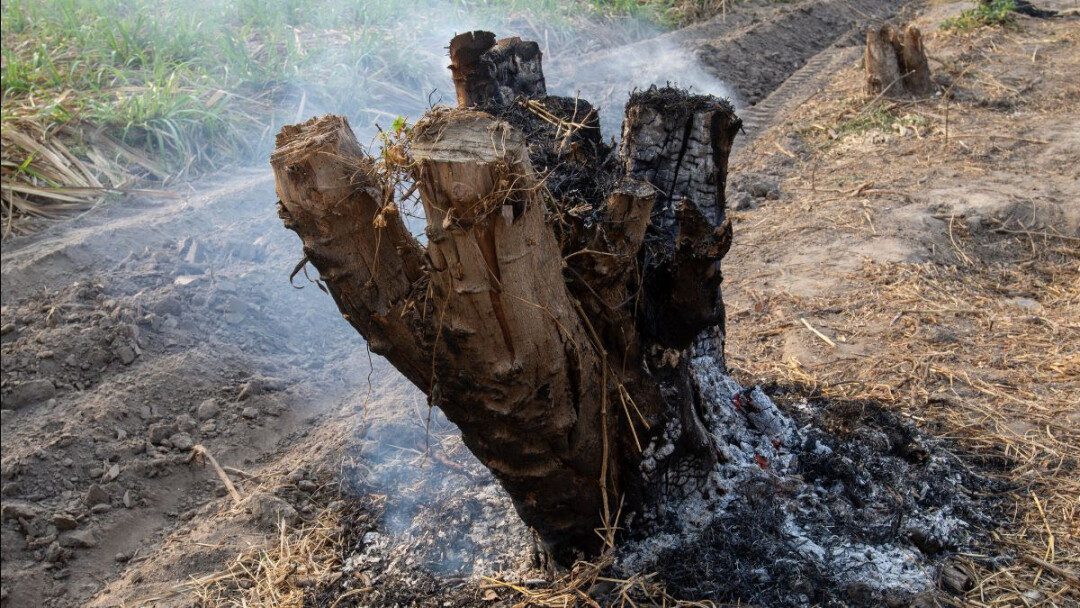
Ahaz is absolutely afraid, and that’s when Isaiah comes with a word from the Lord, where God says do not fear. Stand firm so that you can stand always. God says that He will deal with these kings (I love that the Lord calls them “smoldering stumps”).
Then Isaiah says that the Lord offers to give Ahaz a sign; name it, and the Lord will do it, a sign which will demonstrate that the Lord is with you. Ahaz refuses to ask for a sign. Acting in false piety, Ahaz says that he would never do such a thing and offend the Lord (you can almost hear the false humility in his words).
That’s when Isaiah (and the Lord) becomes angry with Ahaz. Ahaz has the form of faith in God without the substance. He has already decided not to trust God by making an alliance with the Assyrians.
So, God gives Ahaz a sign anyway; in verse 14, the virgin shall conceive and bear a son, and his name will be Immanuel (meaning, “God with us”).
This sign has a double meaning, one for Ahaz and Judah, but also one for the future, pointing to Jesus.
The first meaning is for Ahaz in that context, telling Ahaz that he need not go to the Assyrians because the Lord is with him, and by the time this child is conceived and reaches 12 years of age, the two nations of Israel and Syria will be destroyed.
The second sign is about the Christ, about the future coming of Jesus.
This sign also shows how God will pour out His mercy on His people then, and us now, even when they’ve refused to trust Him.
Isaiah then goes on to tell King Ahaz that because he has refused to trust God and has placed his trust in an alliance with the Assyrians, eventually the Assyrians will ravage the land, but there is still the hope, hope of God’s deliverance from the Assyrians (spoiler—the Lord does just that) and that of Christ, God with us, Immanuel.
This is an incredible word from the Lord, and Isaiah will see some of this fulfilled during his lifetime, as he served many years as a prophet of the Lord.
There are two things in this passage that just stick out to me today. The first is regarding having faith without substance. That was Ahaz. He said he trusted God and wouldn’t put God to the test, but the truth is that he didn’t trust the Lord at all. This passage is a clear warning to us that faith without substance is impotent and powerless to change a person’s life or the world around them.
The second is the call to trust the Lord. We have the benefit of knowing how the Lord will deliver the people of Judah, and we have an even greater blessing as we stand on this side of the cross. We know of the ultimate fulfillment of God’s love, mercy, and forgiveness in His Son Jesus, Immanuel, God with us, with you! As you entrust your life to Him, no smoldering stump can ever harm you.
God bless you, and know that I am praying for you constantly.
Scott